
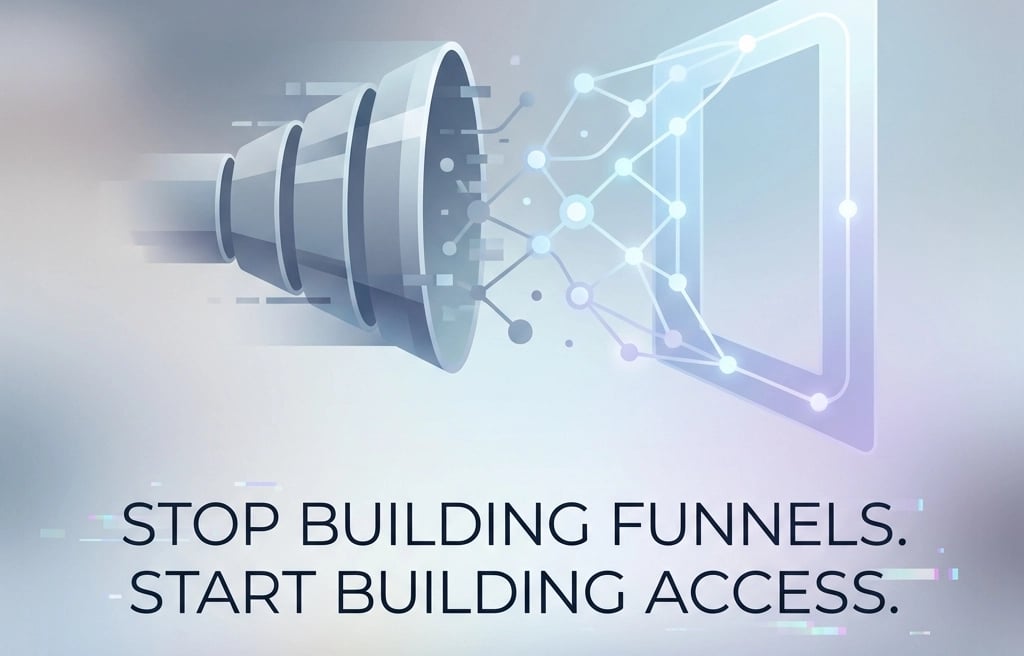
Stop Building Funnels. Start Building Access.
I've spent the last few years watching B2B service companies obsess over funnel optimization. Landing page conversion rates. Email sequences. Lead magnets. Attribution models.
Don't get me wrong: funnels work. But here's what I've learned from working with staffing firms, PE shops, wealth managers, and fractional executives: Most of your funnel problems aren't funnel problems. They're access problems.
The Funnel Obsession Is Missing the Point
When a staffing firm tells me their pipeline is weak, they usually want to talk about:
Better lead magnets
Improved email sequences
Landing page optimization
Content marketing strategy
But dig deeper and you'll find the real issue: They're trying to reach hiring managers who aren't actively hiring. Their perfectly crafted emails are landing in inboxes of people with zero urgency.
Take Sarah, who runs a mid-market recruiting firm in Atlanta. She spent six months building an elaborate content funnel targeting HR directors. Blog posts about "talent acquisition best practices." LinkedIn ads. Email nurture sequences.
Results? Lots of engagement. Zero placements.
The problem wasn't her funnel. It was timing and access. While she was nurturing leads who might hire someday, her competitors were getting warm introductions to companies actively recruiting right now.
What "Access" Actually Means
Access isn't about having more contacts. It's about having the right introduction at the right moment.
Real access looks like this:
Getting introduced to a PE partner the week they close a deal and need interim CFO support
Meeting a wealth manager whose biggest client just asked for referrals to estate planning attorneys
Connecting with a hiring manager whose team just lost two key people and they need replacements fast
This isn't lead generation. It's demand capture.


Why Traditional Lead Gen Fails in B2B Services
Most B2B service companies treat their business like e-commerce. Generate traffic, capture emails, nurture until ready to buy.
But B2B services don't work that way. Your buyers don't browse around comparing options for months. They have a specific problem, they need it solved quickly, and they want to work with someone they trust.
Here's the fundamental difference:
Funnel thinking: Cast a wide net, nurture everyone, convert a percentage
Access thinking: Get introduced to people with active demand, right when they need you
Let's look at how this plays out across different industries:
Staffing & Recruiting
Funnel approach: Create content about hiring trends, capture emails from HR professionals, nurture with weekly newsletters about talent acquisition.
Access approach: Get introduced to companies the week they realize they need outside recruiting help.
I know a recruiter in Austin who tried both approaches. His content funnel generated 200+ leads over six months. Conversion rate: 2%.
Then he focused on building relationships with people who could introduce him to companies with immediate hiring needs. His "pipeline" dropped to 20 conversations per month. Conversion rate: 35%.
Same effort. Dramatically different results.
Private Equity
Funnel approach: Build thought leadership content, speak at conferences, hope deal sources remember you when opportunities arise.
Access approach: Get introduced to business owners the month they decide to explore a sale.
One PE principal I work with puts it bluntly: "I don't need more people to know who I am. I need to meet business owners who are ready to sell. Everything else is just noise."
Wealth Management
Funnel approach: Educational content about financial planning, lead magnets about retirement strategies, nurture high-net-worth individuals over time.
Access approach: Get introduced to successful professionals right after liquidity events, career changes, or major life transitions.
The difference is timing. A business owner who just sold their company needs wealth management advice today. Someone reading your blog about diversification might need your services in five years.


The Access Advantage: Real Examples
Here are three examples of access beating funnels:
Example 1: Executive Search Firm
Instead of content marketing to C-suite executives, they focused on building relationships with board members and PE firms. Now they get introduced to companies during leadership transitions: when search needs are urgent and budgets are approved.
Example 2: Fractional CFO
Stopped writing LinkedIn content about financial strategy. Started building relationships with business lawyers and M&A advisors. Now gets introduced to companies right before fundraising or acquisition processes: when CFO expertise is mission-critical.
Example 3: Commercial Real Estate Broker
Quit the "market update" newsletter approach. Started connecting with business bankers and SBA lenders. Gets introduced to companies expanding operations: right when they need new space.
In each case, they traded volume for timing. Fewer conversations, higher conversion rates.
Building Access: A Simple Framework
So how do you build access? It's simpler than you think, but it requires a fundamental shift in thinking.
Step 1: Map Your Ideal Introduction Sources
Instead of mapping your ideal customers, map the people who know them and can predict their needs.
For staffing firms: Business lawyers, HR consultants, organizational development specialists
For PE firms: Business brokers, M&A attorneys, wealth managers
For fractional executives: Business coaches, turnaround consultants, board members
Step 2: Focus on Reciprocity
Don't ask for introductions. Create value first. Send relevant connections, share opportunities, make helpful introductions yourself.
Step 3: Track Outcomes, Not Activities
Stop measuring email open rates and content engagement. Start tracking: quality of introductions received, timing alignment with prospect needs, conversion rates from warm intros.


The Counter-Argument (And Why It's Wrong)
"But this doesn't scale," you might say. "Funnels let me reach thousands of people."
Here's the thing: in B2B services, you don't need to reach thousands of people. You need to reach the right 20 people at the right time.
A fractional COO doesn't need 1,000 leads per month. They need two perfect introductions to companies in transition.
A wealth manager doesn't need to nurture 5,000 email subscribers. They need to meet three successful entrepreneurs right after exit events.
A PE firm doesn't need 10,000 website visitors. They need access to business owners ready to sell.
Scale matters if you're selling software or consumer products. In B2B services, timing and trust matter more than reach.
The IntroFlows Difference
This is exactly why we built IntroFlows. We don't generate leads. We facilitate introductions between people with complementary needs.
When a PE firm tells us they're looking for add-on acquisitions in healthcare services, we don't create a lead magnet about healthcare M&A trends. We connect them with business brokers who represent healthcare companies ready to sell.
When a fractional CMO needs introductions to SaaS companies scaling their marketing teams, we don't suggest they start a podcast about marketing strategy. We introduce them to VCs and business coaches working with SaaS companies right now.
It's access, not volume. Timing, not traffic.
Making the Shift
If you're ready to stop building funnels and start building access, here's where to begin:
Audit your current approach: How much time do you spend on content creation vs. relationship building?
Identify your introduction sources: Who knows your ideal clients and can predict their needs?
Test the access approach: Spend the next 30 days focused entirely on warm introductions vs. cold outbound
The shift isn't easy. It requires patience and relationship building. But the results speak for themselves: higher conversion rates, shorter sales cycles, and clients who actually need what you're selling.
Ready to build access instead of funnels? Get in touch and let's talk about how warm introductions can transform your business development.